
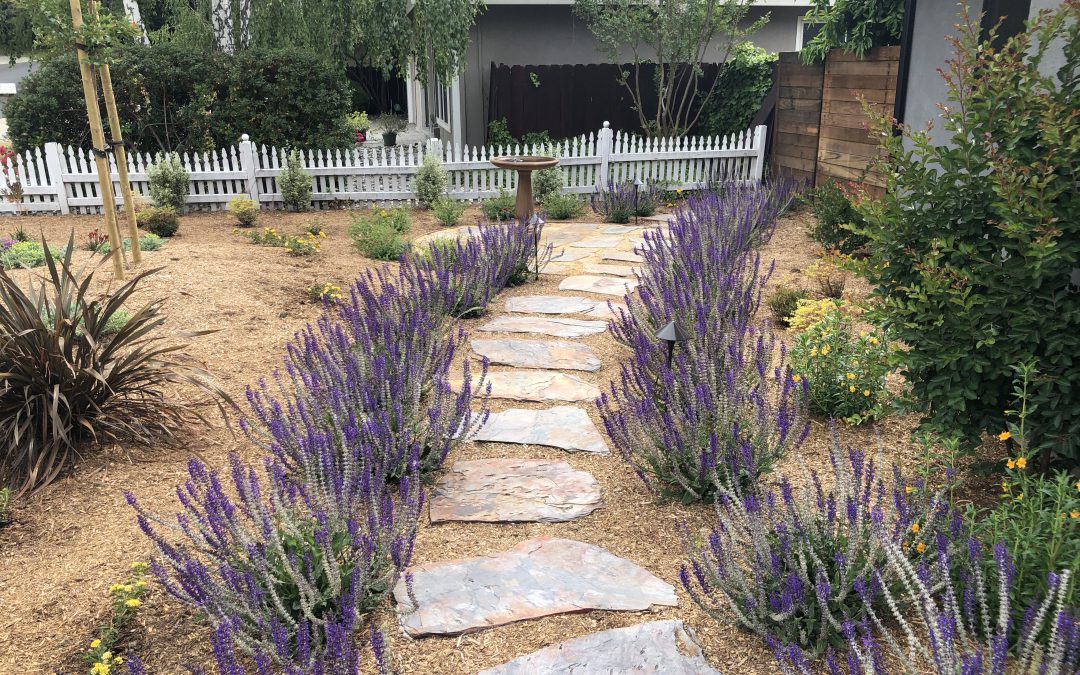
Planning a new outdoor space in the San Francisco East Bay can be exciting. You may be picturing a comfortable patio for weekend gatherings, a drought-tolerant garden that looks beautiful year-round, a safer and more functional backyard, or a complete outdoor living area designed around the way your family uses your property.
Then comes the practical question: How much does landscape installation cost in the SF East Bay? The answer depends heavily on the size of your property, the condition of the existing landscape, the materials you select, the amount of hardscape involved, irrigation requirements, grading, accessibility, and the level of design and construction involved. A simple planting project can be relatively modest, while a comprehensive residential landscape installation with patios, retaining walls, drainage, irrigation, lighting, planting, and outdoor living features can quickly become a $30,000, $50,000, $100,000, or larger investment.
Current Bay Area pricing guides show just how broad the range can be. Recent San Francisco estimates place landscaping anywhere from roughly $5,000 to $150,000 depending on scope, while other local estimates place typical landscaping around $3 to $15 per square foot, with more extensive projects reaching considerably higher.
For East Bay homeowners, a generic cost-per-square-foot figure is only a starting point. The best way to understand your potential investment is to look at what is actually being installed.
This guide explains the major factors behind landscape installation costs in the SF East Bay, what different project budgets can accomplish, why some projects exceed $30,000, and how to plan a higher-value landscape renovation without wasting money on features you do not need.
Key Takeaways
- Landscape installation in the SF East Bay can range from smaller planting and lawn projects to comprehensive outdoor renovations costing $30,000, $50,000, $100,000, or more.
- The biggest cost drivers are project size, site preparation, hardscape, grading, irrigation, drainage, planting, outdoor lighting, materials, accessibility, and design complexity.
- A $30,000+ budget can make sense when several landscape components need to be coordinated as one project rather than installed separately.
- Hardscape generally has a significant effect on the total cost because it involves excavation, base preparation, materials, construction labor, and finishing.
- Hillsides, poor drainage, difficult access, old concrete, compacted soil, and extensive demolition can increase installation costs.
- Professional landscape installation is about more than putting plants in the ground; it involves planning, construction, site preparation, drainage, irrigation, material coordination, and long-term performance.
- Comparing contractors based only on the lowest initial price can be misleading if bids include different scopes, materials, or levels of site preparation.
- A detailed design and installation plan can help East Bay homeowners establish priorities and make better decisions before construction begins.
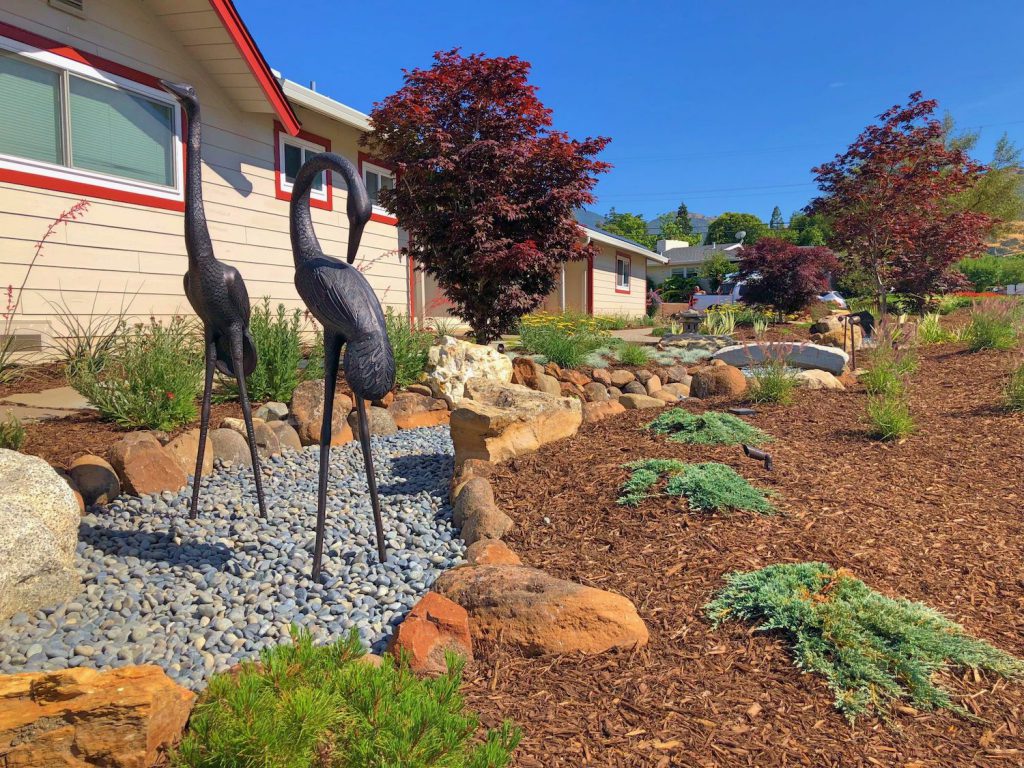
What Is The Average Cost Of Landscape Installation In The SF East Bay?
There is no single average price that accurately represents every East Bay landscape project. A small front-yard refresh may cost only several thousand dollars. A larger backyard renovation involving new planting, irrigation, pathways, and a patio can move into the $15,000 to $30,000 range. A comprehensive property transformation can easily reach $30,000 to $75,000 or substantially more depending on the design and construction requirements.
Recent Bay Area landscaping information similarly shows a wide range of project costs. One Bay Area landscaping contractor notes that square footage, terrain, hardscape-to-softscape ratio, material quality, irrigation, outdoor living features, changes during construction, and contractor selection all influence the final price.
Another current pricing guide for San Francisco places basic landscaping around $3 to $15 per square foot, while more involved projects with hardscape and full design can move toward the upper end of that range or beyond it.
These figures should not be treated as a quote for an East Bay property. They are useful benchmarks for understanding why landscape installation has such a wide price range.
The important question is not simply, “How much does landscaping cost per square foot?” Instead, ask, “What does the landscape installation include?”
A 1,500-square-foot yard with extensive stonework, grading, drainage, irrigation, lighting, and custom planting may cost much more than a 3,000-square-foot yard that primarily needs soil preparation and plants. That distinction becomes especially important for homeowners considering a $30,000+ project.
Typical Landscape Installation Budget Ranges
While every property is different, it can be helpful to think about landscape installation in terms of broad project levels.
Smaller Landscape Improvements: Under $10,000
Projects below $10,000 often focus on a limited area or a specific improvement.
Examples may include:
- New planting beds
- Mulch and soil improvements
- Basic lawn installation
- Small garden renovations
- Limited irrigation work
- Front-yard planting
- Removal and replacement of selected plants
- Simple pathway improvements
The California Landscape Contractors Association’s 2026 East Bay beautification awards categorize “Petite Residential Installation” as residential landscaping costing up to $10,000. That does not mean every project under $10,000 is simple, but it illustrates that smaller residential installations occupy a distinct segment of the market.
Mid-Range Projects: $10,000 to $30,000
This budget can support a more substantial landscape renovation. Depending on the property, homeowners may be able to combine planting, irrigation, hardscape improvements, lawn replacement, grading, and other features.
For example, a homeowner might renovate an outdated backyard with:
- New planting areas
- Drip irrigation
- A small patio
- Decorative stone or pavers
- New lawn or a lawn alternative
- Trees and shrubs
- Mulch and soil amendments
- Basic outdoor lighting
The exact combination matters more than the dollar amount. A $20,000 project with substantial hardscape can look very different from a $20,000 planting-focused renovation.
Comprehensive Landscape Installation: $30,000 to $75,000+
For homeowners interested in transforming an entire yard, $30,000+ landscape installation is often a more realistic planning range. At this level, the project may involve multiple construction disciplines working together.
A comprehensive landscape could include a new patio, pathways, retaining structures, irrigation, drainage, lighting, planting, trees, lawn alternatives, grading, fencing, outdoor kitchen infrastructure, or other outdoor living elements.
Current San Francisco landscaping estimates similarly place complete makeovers in the $30,000 to $75,000+ range. The East Bay has its own site conditions and labor market, so homeowners should use these figures as planning benchmarks rather than guaranteed pricing.
Larger Custom Projects: $75,000 to $150,000+
Large properties and highly customized landscapes can easily exceed $75,000. The project may include extensive hardscape, multiple outdoor rooms, custom masonry, retaining walls, elaborate planting, mature trees, drainage solutions, lighting, irrigation, outdoor kitchens, fire features, or significant site reconfiguration.
The East Bay chapter of the California Landscape Contractors Association currently recognizes residential installation projects in categories ranging from $50,001 to $120,000, $120,001 to $250,000, and above $250,000.
That is a useful context for homeowners considering a major landscape transformation: a six-figure landscape is not inherently unusual when the scope, property size, and construction requirements justify it.
What Determines Landscape Installation Cost?
The final price of a landscape installation is the combined result of many individual decisions.
1. Size Of The Project
Square footage matters because larger areas generally require more labor, materials, soil preparation, irrigation lines, planting, and construction. Size should never be considered in isolation.
A 1,000-square-foot yard with a complicated slope and extensive masonry may require more construction effort than a flat 2,500-square-foot yard with straightforward planting. The layout also matters. A narrow side yard, steep backyard, or property with limited access may take considerably more labor than an open site where equipment and materials can be moved easily.
2. Landscape Site Preparation and Clearing
One of the least glamorous parts of landscape installation can also be one of the most important. Before the new landscape can be installed, the existing property may need to be cleared, graded, excavated, or repaired.
Potential preparation work includes:
- Removing old landscaping
- Demolishing concrete
- Removing outdated irrigation
- Pulling unwanted plants
- Removing tree roots where appropriate
- Correcting compacted soil
- Regrading sections of the yard
- Hauling away debris
- Preparing planting areas
- Creating proper bases for hardscape
A landscape contractor who gives you an unusually low price may simply be assuming less site preparation. That is why homeowners should ask exactly what demolition, excavation, hauling, soil preparation, and cleanup are included.
3. The Hardscape Materials and Construction
Hardscape can significantly increase the cost of a landscape installation. Hardscape includes the non-living structural components of an outdoor space, such as patios, walkways, steps, retaining walls, seat walls, stone features, and other constructed surfaces. Materials may include concrete, natural stone, porcelain, brick, pavers, decomposed granite, or other specialized products.
The cost is not simply the price of the material. A properly installed patio may require excavation, grading, compacted base material, drainage considerations, edge restraints, cutting, installation, and finishing. A retaining wall can involve even more complexity depending on its height, location, soil conditions, drainage requirements, and engineering needs. This is one reason two landscapes with similar dimensions can have very different installation prices.
4. The Irrigation
Water management is another major part of modern residential landscaping. A new landscape may require a completely new irrigation system, while another property may only need modifications to existing lines. The system could include drip irrigation, spray zones, valves, controllers, sensors, and separate watering zones based on plant requirements.
Current San Francisco cost guides put sprinkler-system installation in the several-thousand-dollar range, demonstrating how irrigation can become a meaningful component of a larger landscape budget. For East Bay homeowners, irrigation should be considered during the design stage rather than treated as an afterthought. Planting the landscape first and then trying to retrofit irrigation can create unnecessary work.
5. The Drainage
Drainage is easy to overlook when budgeting for landscaping. It should not be. Water that collects around a patio, flows toward a foundation, erodes a slope, or remains in planting beds can cause ongoing problems.
Depending on the property, drainage improvements might involve grading, swales, drains, catch basins, channel drains, or other solutions. Drainage becomes particularly important on sloped properties. If your landscape design includes significant grade changes, drainage should be considered in the overall site plan.
6. Plant Selection
Plants can represent a relatively small or substantial portion of the total project budget.
Factors include:
- Number of plants
- Plant size
- Species
- Availability
- Trees versus shrubs
- Mature versus young specimens
- Native or climate-adapted selections
- Specialty plants
- Seasonal color
- Container-grown versus other plant material
A landscape filled with young, smaller plants will typically have a different initial cost than one designed around larger specimen trees and mature plant material. There is also a design consideration: choosing plants simply because they look attractive at the nursery does not necessarily produce a successful landscape.
Plant selection should account for sun exposure, soil, irrigation, mature size, drainage, maintenance expectations, and the visual relationship between plants.
7. Outdoor Lighting
Landscape lighting can transform a property after sunset. It can also add to the installation budget. Lighting may be used to illuminate pathways, trees, architectural features, patios, seating areas, steps, or gathering spaces.
A professional installation generally requires more than placing a few lights around the yard. The design needs to consider fixture placement, wiring, transformers, controls, lighting levels, glare, and how the system will look at night. For a high-value landscape project, lighting can be an effective way to extend the usefulness of the outdoor space beyond daylight hours.
8. Outdoor Living Features
Outdoor living features are one of the biggest reasons a landscape project can move beyond $30,000. A basic yard renovation and a complete outdoor living environment are fundamentally different projects.
Potential features include:
- Patios
- Outdoor kitchens
- Built-in grills
- Fire features
- Pergolas
- Seating walls
- Dining areas
- Outdoor entertainment spaces
- Custom steps
- Multiple gathering areas
These additions can require substantial construction, utility coordination, specialty materials, and detailed planning. The result is more than a decorative garden. The landscape becomes an extension of the home.
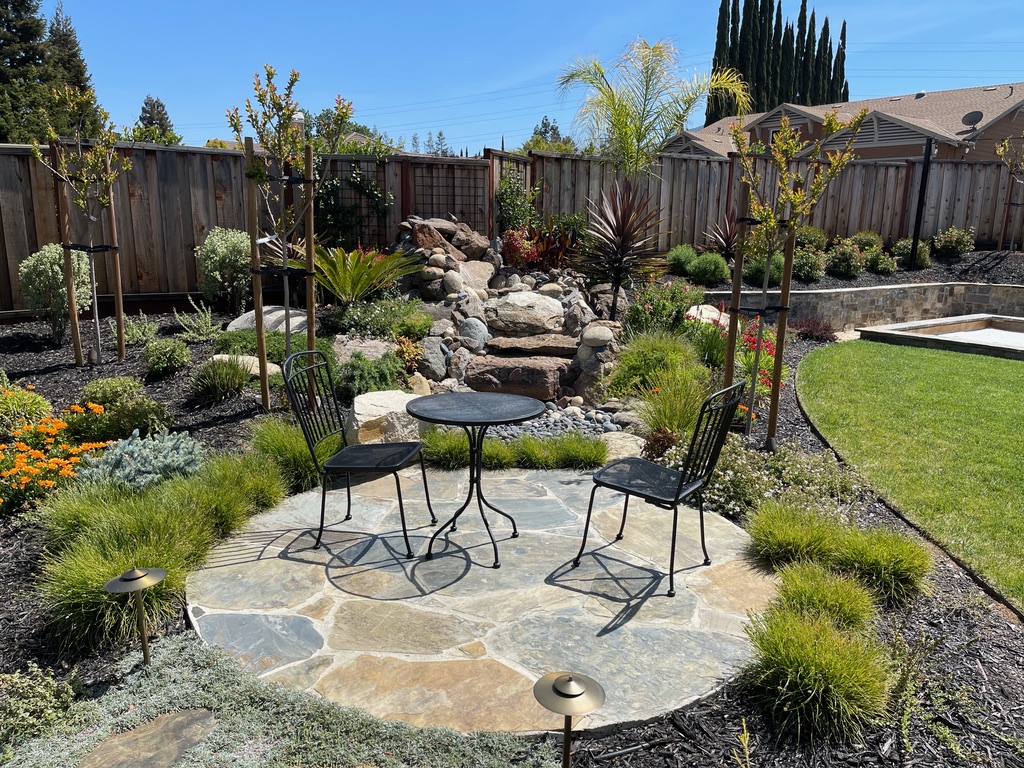
Why East Bay Terrain Can Affect Your Budget
The SF East Bay includes a wide variety of properties. Some yards are relatively flat and straightforward. Others are located on hillsides or have elevation changes that require careful grading and retaining solutions. Terrain can affect almost every part of the installation.
A slope may require:
- Retaining walls
- Steps
- Terracing
- Drainage
- Soil stabilization
- Specialized access
- Additional excavation
- More complex irrigation
The Bay Area landscaping industry specifically identifies terrain as an important factor in project pricing, with hillside properties presenting additional challenges. This is why a contractor should evaluate the actual property rather than providing a detailed price based only on photographs or square footage.
Why Accessibility Matters
Your backyard may look easy to reach until construction begins.
- Can materials be brought directly into the yard?
- Is there a side gate?
- How wide is it?
- Can equipment reach the work area?
- Will materials need to be moved manually?
- Is the property located on a steep slope?
- Are there stairs between the driveway and backyard?
These questions can influence labor requirements. A property with easy access may allow materials and equipment to move efficiently. A difficult-access property can require additional handling and labor. When comparing estimates, consider whether contractors have made different assumptions about access.
What Does Professional Landscape Installation Include?
Professional landscape installation should be viewed as a coordinated process rather than a collection of individual landscaping tasks. A comprehensive installation typically begins with understanding how the homeowner wants to use the property. The process can then move through site evaluation, design development, material selection, preparation, construction, planting, irrigation, lighting, cleanup, and final adjustments.
A professional team can also identify conflicts before they become expensive problems. For example, a patio layout affects drainage. Drainage affects grading. Grading affects steps and retaining structures. Plant selection affects irrigation. Lighting affects electrical planning. Treating each item separately can create problems. Treating the landscape as one connected system generally creates a more cohesive result.
How a $30,000 Landscape Budget Can Be Allocated
There is no universal formula for dividing a $30,000 landscape budget. Thinking in categories can help homeowners understand where their money is going. A project might allocate a significant portion to hardscape and site preparation, another portion to plants and soil, and additional funds to irrigation, drainage, lighting, design, construction labor, and project management.
The proportions change dramatically depending on the design. For example, a planting-heavy garden may spend more on plant material, while a modern outdoor living space may allocate much more toward masonry and hardscape.
A recent local pricing breakdown for San Francisco illustrates this concept by separating landscaping expenses into labor, materials, design and planning, compliance-related costs, and contingency. The lesson is more important than the exact percentages: Do not judge a landscape estimate by the total alone. Review what the total buys.
A $30,000+ Backyard Transformation
Imagine an East Bay homeowner has an outdated backyard with cracked concrete, limited planting, poor irrigation, and an underused lawn. Instead of making several small improvements over several years, the homeowner decides to renovate the space comprehensively.
The project might involve:
- Removing old concrete and unwanted landscaping.
- Improving grading and drainage.
- Building a new patio.
- Installing pathways connecting the patio to the garden.
- Creating new planting beds.
- Installing drip irrigation.
- Adding trees and layered planting.
- Installing landscape lighting.
- Adding comfortable outdoor seating areas.
- Completing final soil preparation, planting, cleanup, and finishing.
That is no longer simply a gardening project. It is a landscape construction project. Depending on materials, site conditions, square footage, and design complexity, a project like this can reasonably move beyond $30,000.
Is Landscape Installation Worth the Investment?
For homeowners considering a significant renovation, cost should be evaluated against the purpose of the project. A successful landscape can improve how you use your property every day. Instead of an unused backyard, you might have a dining area. Instead of a difficult slope, you might have a series of usable terraces. Instead of a high-maintenance lawn, you might have a thoughtfully designed planting environment.
There can also be aesthetic benefits. A cohesive landscape can improve the relationship between the house and the surrounding property by creating visual transitions between architecture, hardscape, plants, and outdoor living areas. The goal should not be to spend as much as possible. The goal should be to spend intelligently on improvements that matter to your property and lifestyle.
How To Get More Value From A Landscape Installation
A larger budget does not automatically produce a better landscape. Good planning is what makes a substantial investment work harder.
Start With Priorities
Before selecting materials, decide what matters most.
- Do you want a space for entertaining?
- Do you need more privacy?
- Is water efficiency important?
- Do you want a low-maintenance yard?
- Are you trying to improve curb appeal?
- Do you need better drainage?
- Do you want multiple outdoor rooms?
Once your priorities are clear, the design can focus resources where they have the greatest impact.
Think About the Entire Property
- Avoid designing one feature without considering what surrounds it.
- A new patio should relate to the house.
- A walkway should connect meaningful destinations.
- Planting should complement the architecture.
- Lighting should support circulation and highlight important features.
- Drainage should be addressed before hardscape and planting are finalized.
- A complete plan can prevent expensive rework.
Invest in Infrastructure
Some landscape improvements are highly visible. Others are hidden. Irrigation, drainage, grading, soil preparation, and properly constructed hardscape may not be the first things guests notice, but they can determine how well the finished landscape performs. When budgeting, do not spend the entire amount on visible finishes while leaving insufficient resources for the underlying construction.
Choose Materials For The Property
The most expensive material is not always the best material. Material selection should consider appearance, durability, maintenance, climate, use, and compatibility with the existing home. A professional landscape installation should balance aesthetics with practical performance.
How To Compare Landscape Installation Estimates
If you receive multiple proposals, avoid comparing only the bottom-line numbers.
Instead, compare the scope.
- Does each proposal include demolition?
- Is soil preparation included?
- Are irrigation modifications included?
- What type and size of plants are specified?
- Is the patio material the same?
- Are drainage improvements included?
- Is lighting included?
- Does the proposal include design?
- Who handles cleanup?
- Are there allowances for materials?
- What happens if unexpected site conditions are discovered?
Two contractors can submit estimates that appear thousands of dollars apart while offering substantially different projects. The lower bid may not be cheaper if it excludes important components that you will later need to purchase separately.
Questions To Ask Before Hiring A Landscape Contractor
Before moving forward with residential landscape installation, ask the contractor to explain the complete process. You should understand who is responsible for design, site preparation, installation, irrigation, hardscape, planting, cleanup, and any necessary coordination.
- Ask how the contractor handles changes during construction.
- Ask whether the proposal identifies materials and quantities clearly.
- Ask what assumptions were made about site conditions.
- Most importantly, ask the contractor to walk you through the proposal.
A professional should be able to explain why the project costs what it does without relying on vague descriptions.
Why Professional Planning Matters For High-Value Projects
A $30,000+ landscape installation deserves more planning than a small planting refresh. When several systems are being installed simultaneously, mistakes become more expensive. Consider a patio that is installed before drainage is properly addressed. Or irrigation that is designed before the final planting plan is complete. Or lighting installed without considering the mature size of trees.
Professional planning helps coordinate these components before construction begins. The East Bay’s professional landscaping market includes contractors, landscape designers, and landscape construction companies with different specialties. For homeowners, the important consideration is finding a team whose capabilities match the size and complexity of the project.
How Long Does Landscape Installation Usually Take?
- The timeline varies according to project scope.
- A small planting project may take only a few days.
- A larger residential landscape renovation can take several weeks.
A comprehensive project involving demolition, grading, drainage, hardscape, irrigation, lighting, structures, and extensive planting can take substantially longer. Weather, material availability, site access, design revisions, inspections where applicable, and unexpected site conditions can also affect the schedule. The best approach is to ask for a realistic project sequence rather than focusing on a single completion date.
How To Budget For Your East Bay Landscape Project
Start by deciding whether you are looking for a refresh or a transformation. If you only need planting and minor improvements, a smaller budget may be appropriate. If you want to redesign the entire backyard, install substantial hardscape, improve drainage, add irrigation and lighting, and create outdoor living areas, planning for $30,000 or more may be more realistic. From there, prioritize.
A good landscape plan can also be phased in when necessary. For example, the homeowner might complete grading, drainage, irrigation infrastructure, hardscape, and major trees first, then add secondary planting or other features later. Phasing should be planned carefully. Installing infrastructure after the landscape is finished can create unnecessary demolition and additional costs.
Residential Landscape Installation vs. Basic Landscaping
It is useful to distinguish between ongoing landscape maintenance and residential landscape installation. Mowing, pruning, weeding, seasonal cleanup, and routine gardening are maintenance services. Landscape installation is construction and improvement. It can involve changing the physical layout of the property, installing new hardscape, building planting beds, improving drainage, installing irrigation, adding trees, and creating outdoor living spaces.
That distinction explains why a homeowner who is accustomed to paying for regular gardening may be surprised by the price of a complete landscape renovation. You are not simply paying for someone to care for the yard. You are investing in the design and construction of a new outdoor environment.
Common Mistakes That Increase Landscape Costs
One of the most common mistakes is starting construction before the design is sufficiently developed. Another is selecting materials without understanding installation requirements. Some homeowners also underestimate demolition and site preparation. Others focus heavily on the initial installation price and overlook long-term maintenance.
A landscape that looks inexpensive initially may require substantial watering, pruning, replacement planting, or repairs later. A better approach is to consider the total lifecycle of the landscape.
- What will it require after installation?
- How much irrigation will it need?
- How often will plants need pruning?
- Are materials durable enough for the intended use?
- Will drainage remain effective?
- Will the design still work as plants mature?
These questions can make a major difference in long-term value.
Building A Landscape That Fits The East Bay
The best landscape installation is not necessarily the most elaborate. It is the one that responds appropriately to the property. East Bay homeowners have access to a wide range of architectural styles, lot configurations, climates, slopes, mature trees, and neighborhood characteristics. A landscape should respond to those conditions instead of forcing the same design onto every property.
A thoughtful design can combine practical site improvements with a strong visual identity. For one homeowner, that might mean a low-maintenance garden with native and climate-adapted plants. For another, it could mean a sophisticated outdoor living area with a large patio, integrated lighting, specimen trees, and custom hardscape. Both can be excellent landscape installations. The difference is whether the design serves the property and the homeowner.
Final Remarks
For a small project, the investment may be several thousand dollars. For a more substantial residential renovation, costs can move into the $15,000 to $30,000 range. For homeowners seeking a comprehensive transformation with hardscape, irrigation, drainage, lighting, planting, and outdoor living features, a $30,000+ landscape installation is often a more realistic starting point. Larger and highly customized properties can reach $75,000, $100,000, $150,000, or considerably more.
The important thing is not to choose a budget based on an arbitrary number. Choose it based on what you want your property to accomplish. A well-designed landscape can do much more than make a yard look better. It can create usable outdoor rooms, improve circulation, address drainage, provide privacy, support comfortable entertaining, enhance curb appeal, and make the property feel more connected to the surrounding environment.
For homeowners considering a significant investment, professional landscape installation provides the opportunity to coordinate all of these elements as one cohesive project. The best next step is to evaluate your property, define your priorities, establish a realistic budget, and develop a clear scope before construction begins.
If you are considering a new patio, complete backyard renovation, front-yard transformation, irrigation installation, outdoor living area, or full-property landscape renovation, a professional evaluation can help you understand what your property requires and what your budget can realistically accomplish.
Frequently Asked Questions
1. How Much Does Landscape Installation Cost in the SF East Bay?
Landscape installation costs vary considerably based on project size and scope. Smaller projects may cost several thousand dollars, while comprehensive residential landscape installations can reach $30,000 to $75,000 or more. Larger custom projects can exceed $100,000.
The most important factors include hardscape, grading, drainage, irrigation, planting, lighting, site access, demolition, and design complexity. A property evaluation and detailed scope are necessary to determine an accurate project price.
2. Is $30,000 Enough for a Complete Landscape Installation?
A $30,000 budget can support a substantial landscape project, but whether it is enough for a “complete” installation depends on the property. A $30,000 budget might cover a meaningful backyard transformation involving planting, irrigation, hardscape, and other improvements on a relatively straightforward site.
If the property requires major retaining walls, extensive grading, difficult demolition, extensive drainage work, premium materials, or multiple outdoor living structures, the budget may need to be higher.
3. What Is The Most Expensive Part Of Landscape Installation?
There is no single most expensive component for every project. Hardscape and site construction can represent a substantial portion of the budget, particularly when the project includes patios, retaining walls, steps, or extensive excavation. Site preparation, grading, drainage, and difficult access can also increase costs significantly. For some projects, extensive planting and mature trees may account for a larger share of the investment.
4. Does Landscape Installation Include Irrigation?
Irrigation may be included in a landscape installation, but homeowners should confirm this in the written proposal. Some contractors price irrigation separately, while others incorporate it into the overall project. Ask what type of system is included, how many zones are planned, whether existing irrigation will be reused, and whether the system is designed around the final plant selection.
5. Why Does Professional Landscape Installation Cost More Than Basic Landscaping?
Professional landscape installation involves construction, planning, coordination, materials, site preparation, and installation rather than routine yard maintenance. A comprehensive project may require grading, demolition, hardscape construction, irrigation, drainage, planting, lighting, and detailed project management. The additional cost reflects the complexity and permanence of the work.
6. Should I Use A Cost-Per-Square-Foot Estimate For My Landscape Project?
Cost per square foot can provide a useful starting point, but it should not be used as the only way to budget a landscape installation. Two yards with identical square footage can have dramatically different costs because of terrain, access, hardscape, materials, drainage, irrigation, and existing conditions. Use square-foot pricing as a general benchmark, then rely on a detailed scope and property-specific estimate for actual planning.
7. How Can I Keep My Landscape Installation Within Budget?
Start with a clear design and establish priorities before construction begins. Decide which improvements are essential and which are optional. Compare contractor proposals based on scope rather than price alone. Invest appropriately in infrastructure such as drainage, irrigation, grading, and hardscape construction.
If the complete vision exceeds your immediate budget, discuss phasing with your contractor before construction begins. A properly phased project can help you achieve the larger vision without installing components in an order that creates unnecessary future work.
Start Your Residential Landscape Installation With a Proven Local Team
A great landscape starts with more than choosing plants and materials. Poor planning, disconnected contractors, drainage problems, irrigation mistakes, and improper installation can turn an exciting project into an expensive headache. Vince’s Landscaping takes a different approach to landscape installation, bringing design, construction, and installation together so every part of your outdoor space works as one complete plan.
Since 1982, our family-owned team has helped East Bay homeowners transform outdated and underused yards into outdoor spaces designed around the way they actually live. From hardscaping and planting to irrigation, lighting, outdoor living areas, and complete landscape installation, our experienced crews manage the project from start to finish with careful planning and open communication.
If you’re ready to invest in a landscape that looks great, functions properly, and is built to last, Vince’s Landscaping can help. Schedule a consultation and discover what professional landscape design and installation can do for your home.
Disclaimer
The materials available on this website are provided for general informational and educational purposes only. They are not intended to serve as professional design, construction, engineering, architectural, legal, or other specialized advice for any specific property or project.
Every landscape project is different, and conditions such as grading, drainage, soil, irrigation, existing structures, local codes, permitting requirements, and site access can affect the appropriate design and construction approach. You should consult with a qualified landscape professional, contractor, landscape architect, engineer, or other appropriate professional before making decisions based on information provided on this website.
Do not act or refrain from acting solely based on the content of this site. Information may change over time and may not reflect current building codes, regulations, industry standards, product specifications, or site-specific requirements. Vince’s Landscaping disclaims liability for actions taken or not taken based on the information contained on this website to the fullest extent permitted by law.
Recent Comments